
How to Get Blood Off Fabric: The Meticulous Guide to Protecting Fine Textiles
That bowl of warm water you’re reaching for might be the very thing that permanently ruins your bespoke upholstery. When you are searching for how to get blood off fabric, the immediate instinct is to act fast; however, acting incorrectly is often more damaging than the accident itself. Blood removal is a high-stakes race against protein coagulation where the wrong temperature acts as a catalyst for a permanent bond.
We understand the quiet panic that arises when a luxury textile is compromised. You worry about chemical damage to delicate fibres and the potential loss of value in your bespoke furniture. This meticulous guide shares the professional secrets to removing blood stains whilst preserving the integrity of your luxury Kent home interiors. We adhere to the latest standards, including the GB MCL safety regulations updated on August 15, 2026, to ensure every treatment is both effective and responsible.
You will discover how to use enzyme-based cleaners to break down proteins without harming texture or colour. We also provide a clear framework for when a professional intervention is required to maintain your property's pristine condition. Experience the MaintainClean difference through precision, care, and the technical knowledge required for superior fabric stewardship.
Key Takeaways
Learn why cold water is essential for protein-based stains and how heat can permanently bond haemoglobin to your delicate fibres.
Master the specific protocols for different luxury materials to understand exactly how to get blood off fabric without compromising the texture of silk or wool.
Discover the importance of using pH-neutral soaps and distilled water to prevent spreading the stain perimeter during the initial blotting phase.
Identify the significant risks associated with household chemicals like hydrogen peroxide on dark or patterned bespoke upholstery.
Recognise the precise moment when a discreet, professional intervention is necessary to preserve the long-term value of your high-end Kent interiors.
Table of Contents The Science of Protein Stains: Why Cold Water is Non-Negotiable Material-Specific Protocols for Luxury Fabrics Effective DIY Solutions vs. Professional Grade Intervention Step-by-Step Restoration: From Fresh Spills to Dried Stains Professional Fabric Care in Kent and the Southeast
The Science of Protein Stains: Why Cold Water is Non-Negotiable
Understanding The Science of Stain Removal is vital for anyone managing high-end interiors. Blood is a complex organic substance. Unlike synthetic spills or simple grease, it contains haemoglobin and other proteins that act as natural dyes when they encounter the wrong conditions. Timing is the most critical factor in successful restoration. A fresh spill sits on the surface of the fibres; a dried stain has already begun a molecular integration into the textile’s structure. When you are researching how to get blood off fabric, you're essentially looking for ways to interrupt this bonding process before it becomes permanent.
The difference between a successful rescue and a permanent blemish lies in your initial reaction. Fresh blood is water-soluble. It can be lifted with minimal intervention if caught within the first few minutes. Once the blood dries, the proteins oxidise and create a much tougher bond with the material. At this stage, the stain requires more sophisticated chemical breakdown to release the grip on the delicate weave of your upholstery or garments.
The Immediate Response Protocol
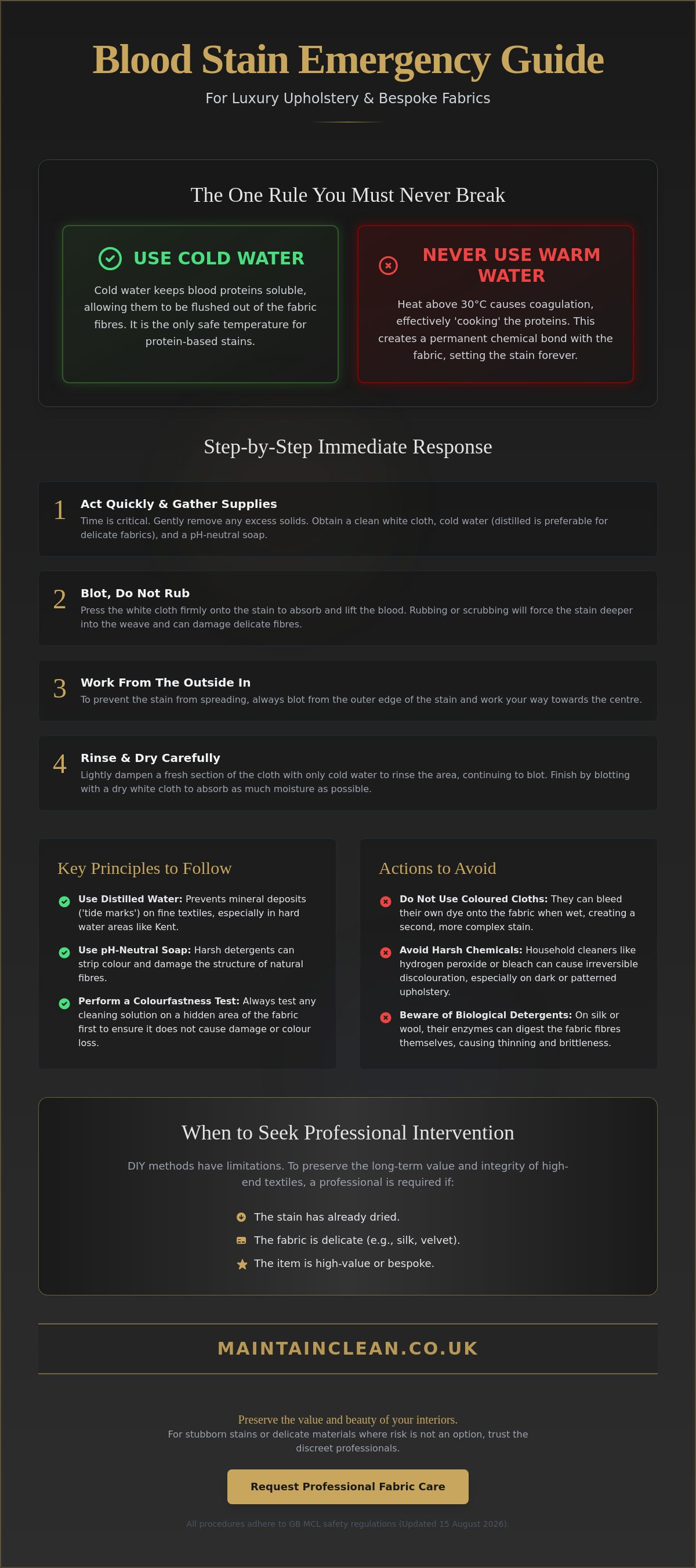
Physical friction is the primary cause of permanent fabric damage. Rubbing a stain pushes the haemoglobin deeper into the weave; it can also fray delicate natural fibres like silk or fine wool. You must use a clean, absorbent white cloth for every stage of the process. Coloured towels are a significant risk. They often bleed their own dyes into the fabric when wet, which creates a secondary, often irreversible problem. We recommend using distilled water for all DIY attempts in your Kent home. Unlike standard tap water, which contains minerals that leave unsightly tide marks or rings on fine textiles, distilled water remains neutral and evaporates without leaving a trace. Blot from the outside of the stain inwards to prevent the perimeter from expanding.
Why Warm Water is a Fatal Mistake
Heat is the absolute enemy of protein restoration. Any temperature exceeding 30°C triggers a process called coagulation. Essentially, heat cooks the proteins. This causes them to bind permanently to the fabric's molecular structure. The chemical bond is particularly aggressive on natural fibres like wool or cotton. The scales of these fibres open up when warm and trap the coagulated blood as they cool and close. Once a stain is set by heat, complete removal becomes significantly more difficult; it usually requires the specialised equipment used in our professional carpet & upholstery cleaning services. Knowing how to get blood off fabric starts with keeping the kettle far away from the spill. Cold water keeps the proteins in a liquid state, allowing them to be lifted away rather than locked in.
Material-Specific Protocols for Luxury Fabrics
Preserving the aesthetic perfection of bespoke interiors requires more than a generic approach. Every textile responds differently to moisture and chemistry; therefore, identifying the fibre is your first priority. When you are determining how to get blood off fabric, you must distinguish between plant-based fibres like cotton and protein-based fibres like silk or wool. Using the wrong solution doesn't just fail to remove the stain; it can cause irreversible structural damage to the weave.
A common error found in standard cleaning guides is the recommendation of biological detergents. These contain enzymes specifically designed to break down organic proteins. Whilst effective on cotton, these enzymes cannot distinguish between the blood stain and the protein-based fibres of a silk blouse or a wool rug. They effectively begin to digest the fabric itself. This leads to brittleness and thinning of the material over time. Always perform a colourfastness test on a hidden area, such as the underside of a cushion or an interior seam, before applying any solution.
Local environmental factors also play a role in your success. Kent is well-known for its hard water areas, where high mineral content can interfere with how detergents react. These minerals often prevent soap from rinsing away cleanly, which leaves a dull residue that attracts more dirt later. Using distilled water remains the premium choice for maintaining the clarity of fine textiles. This ensures that no calcium deposits are left behind to stiffen the delicate pile of your upholstery.
Caring for Silk and Wool
Silk and wool are sensitive to high-alkaline solutions, which can strip the natural oils and leave the fibres feeling harsh. For fresh stains on these delicate weaves, a gentle saline solution is often the safest entry point. Mix one teaspoon of salt with 250ml of distilled water and apply with a white cloth. For luxury knitwear, only use professional-grade pH-neutral detergents that are specifically labelled for protein fibres. These preserve the softness and lustre that define high-end garments.
Upholstery and Non-Washable Textiles
Managing moisture is the greatest challenge when treating velvet or chenille upholstery. These fabrics are prone to permanent watermarking if the backing becomes saturated. The "dry-blot" technique is essential for expensive Kent estate drapery; use a barely damp cloth to lift the stain, followed immediately by a dry, weighted cloth to absorb any residual moisture. If you are dealing with a significant spill on a fixed piece of furniture, it's often safer to rely on luxury cleaning services london. Our technicians use specialised low-moisture extraction methods to ensure your carpet & upholstery cleaning needs are met without the risk of mildew or textural collapse.
Effective DIY Solutions vs. Professional Grade Intervention
The internet is saturated with "miracle" cleaning hacks that often promise more than they can deliver. While some suggestions are harmless, others pose a significant risk to the longevity of your home's fine textiles. Saliva is a frequent recommendation on community forums like Reddit; however, it's unsanitary and can leave biological residues that attract bacteria. When you are assessing how to get blood off fabric, your priority must be the preservation of the material's structural integrity. Domestic methods are best reserved for minor, fresh incidents on robust fabrics rather than high-value bespoke pieces.
One of the most dangerous DIY suggestions is the use of hydrogen peroxide. While it's an effective oxidising agent, it acts as a mild bleach. On dark, patterned, or richly dyed upholstery, peroxide can cause permanent "ghosting" or irreversible colour loss. Once the pigment is stripped from the fibre, even the most meticulous restoration cannot return it to its original state. If you're unsure about the stability of a dye, the safest course of action is to stop and consult a specialist.
Safe Household Alternatives
For fresh spills on heavy cotton or linen sheets, a salt-paste method is a reliable first step. Mix table salt with a small amount of cold distilled water to create a thick paste. Apply this to the stain; the salt's osmotic properties draw the moisture and haemoglobin out of the fibres. For older, dried blood stains, glycerine can be used to re-hydrate and soften the protein, making it easier to blot away. White vinegar is another common tool, but it must be used with extreme caution. Its acidity can damage certain dyes or acid-sensitive fibres, so always perform a colourfastness test first.
When DIY is Not Enough
Domestic cleaning products often lack the specific surfactant concentration required to break the molecular bond of an oxidised protein stain without over-saturating the material. Professional intervention becomes necessary when the stain has penetrated the deep padding of upholstery or when the fabric is a non-washable luxury weave. Professional vacuum extraction is superior because it pulls the liquid out of the textile rather than pushing it deeper into the backing. Modern cleaning 2025 standards involve advanced chemical spotting techniques that utilise pH-neutral agents to dissolve stains safely. This level of precision ensures that your Kent estate's interiors remain pristine without the risk of chemical burns or textural collapse.
Step-by-Step Restoration: From Fresh Spills to Dried Stains
Restoring a fine textile to its pristine state requires a disciplined, methodical approach. Before you begin the process of how to get blood off fabric, you must assemble the correct tools. Professional results depend entirely on the quality of your materials. Ensure you have a supply of distilled water, several lint-free white cloths, and a pH-neutral soap. Using a coloured cloth or a generic detergent often introduces new variables, such as dye transfer or chemical burns, which can complicate the restoration. Meticulous preparation is the foundation of superior fabric maintenance.
The first physical interaction with the stain is the most delicate. You must lift any excess liquid by blotting gently with a dry cloth. Never apply pressure; your goal is to absorb, not to compress. This initial action should focus on containing the spill within its current boundaries. Once the surface moisture is removed, you can begin the "Flush and Blot" cycle. This involves introducing a small amount of cold distilled water to the area and immediately lifting it back out with a clean section of the cloth. This cycle prevents the haemoglobin from settling into the core of the fibres.
Treating Fresh Blood Stains
Success with fresh spills is a matter of speed and precision. If the item is a garment or a removable cover, flush the stain from the reverse side using cold water. This pushes the blood out of the weave rather than through it. For fixed upholstery, apply a mild saline solution, specifically one teaspoon of salt to 250ml of distilled water, directly to the area. Continue the blotting process with rhythmic, light touches. You must stop only when there is no longer any red or pink transfer onto your white cloth. If you find the residue is stubborn, it is time to contact our experts for carpet & upholstery cleaning to ensure the padding remains unaffected.
Reviving Dried or Set-In Stains
Dried stains are significantly more complex because the proteins have already begun to oxidise. The first step is rehydration. A mixture of one part glycerine to two parts distilled water should be applied to the stain and left for 20 minutes. This softens the hardened protein structure. Next, apply a targeted spotting agent designed for protein breakdown, ensuring it complies with the GB MCL standards updated on August 15, 2026. Finally, neutralise the area with a very dilute vinegar solution followed by a final distilled water rinse. This prevents the chemical yellowing that often appears weeks later if residues are left behind.
Drying must be achieved through natural airflow. Avoid hairdryers or proximity to radiators, as temperatures above 30°C will ruin the structural integrity of the fibres. Position a fan to circulate air across the surface to speed up evaporation safely and prevent watermarking.
Professional Fabric Care in Kent and the Southeast
While understanding the technical steps of how to get blood off fabric is essential for immediate mitigation, the long-term preservation of luxury interiors often necessitates a professional tier of care. High-end textiles, particularly those found in bespoke Kent residences, represent a significant financial and aesthetic investment. Domestic cleaning attempts, even when executed with care, lack the depth of extraction required to ensure no biological residue remains within the deeper layers of the upholstery padding or carpet pile. Our approach at Maintain Clean Ltd is built on a foundation of precision, utilizing the most advanced restoration technology available in 2026.
We provide a discreet, premium service tailored specifically for high-net-worth individuals across the Southeast. Our technicians are deeply integrated into the local luxury market, serving estates in Sevenoaks, Tunbridge Wells, and Canterbury with the quiet excellence our clientele expects. We understand that privacy is as valuable as cleanliness; therefore, our team operates with total discretion, ensuring your home management remains seamless and stress-free.
The Maintain Clean Difference
Our methodology far exceeds the capabilities of domestic appliances. We utilise industrial-grade extraction technology that removes moisture and contaminants at a molecular level without compromising the delicate structure of the fibre. In alignment with the GB MCL regulatory updates of August 15, 2026, we only employ eco-friendly, non-toxic spotting agents that meet the highest safety and environmental standards. This expertise extends to the handling of antique textiles and bespoke modern furniture, where traditional "soak and scrub" methods would be catastrophic. We treat every piece as a unique asset requiring a customised restoration plan.
Securing Your Property’s Pristine Condition
True fabric stewardship goes beyond reactive stain removal. We recommend integrating professional textile care into a regular luxury maintenance schedule to prevent the gradual accumulation of atmospheric pollutants and allergens. For our clients, we also offer professional fabric sealants. these advanced treatments create an invisible, breathable barrier that provides vital seconds of protection during a spill, making the process of how to get blood off fabric significantly more successful if an accident occurs. For critical incidents involving irreplaceable items, our emergency call-out options provide the rapid, expert intervention needed to prevent a permanent loss of value.
Maintaining a pristine environment requires a partner who values aesthetic perfection as much as you do. Our commitment to quality and professional integrity ensures that your home interiors are not just cleaned, but meticulously preserved for the future. Experience the Maintain Clean difference for your Kent estate and ensure your property remains a sanctuary of excellence.
Preserve Your Interior Investment through Expert Stewardship
Restoring a luxury textile is a balance of immediate precision and technical knowledge. The secret of how to get blood off fabric lies in using cold distilled water and avoiding the heat that causes permanent protein coagulation. Whether you're managing a fresh spill on a silk weave or a set-in stain on bespoke upholstery, identifying the fibre type before intervention is the only way to ensure the material's longevity. Acting with calm confidence prevents the common errors that lead to permanent structural damage and loss of value.
We are specialists in Kent luxury residential cleaning, providing meticulous care for high-value upholstery that domestic methods can't match. Our team delivers a discreet and professional service across the Southeast, ensuring your property remains in pristine condition. We operate in full compliance with the GB MCL safety standards updated on August 15, 2026, using only the highest quality spotting agents. Restore your fine fabrics with Maintain Clean Ltd and experience the superior standards of a dedicated property steward. Your home deserves nothing less than aesthetic perfection and professional integrity.
Frequently Asked Questions
Can I get blood out of a sofa that is "Dry Clean Only"?
Yes, you can treat "Dry Clean Only" upholstery, but you must strictly control the moisture levels to prevent permanent watermarking. Use a barely damp white cloth to blot the area rather than saturating the material. For delicate velvet or silk pieces, our professional low-moisture extraction is the safest way to ensure the stain is lifted without causing textural collapse or mildew in the padding.
Does salt really help remove blood stains from fabric?
Salt acts as a powerful osmotic agent that draws haemoglobin out of robust fibres like cotton or linen. When you are learning how to get blood off fabric, a thick salt paste is a reliable first response for fresh spills. However, salt is significantly less effective on dried stains or delicate protein-based materials like silk, where it can be too abrasive for the fine weave.
What is the best way to get blood off white silk or wool?
The most effective method for white protein-based fibres is a gentle saline solution followed by a pH-neutral detergent specifically formulated for silk. You must avoid biological detergents at all costs. These contain enzymes that digest the protein in the wool or silk fibres, which leads to permanent brittleness and thinning of the material over time.
Is it true that saliva can remove your own blood from fabric?
While saliva contains amylase and lipase enzymes that break down organic proteins, it is not a recommended professional technique. Saliva introduces bacteria into the textile and can leave biological residues that attract further soiling. On light-coloured luxury fabrics, this unsanitary method often results in a permanent yellowish ring that is harder to remove than the original blood.
How much does professional upholstery cleaning cost in Kent?
Professional care prices in Kent vary by the type of item and the complexity of the fabric. As of May 2026, ACE Dry Cleaners in Kent charges £13.50 for a two-piece suit, while Iron Maids charges £11.50 for the same service. For bespoke upholstery or on-site estate cleaning, costs are typically provided via a bespoke quote to account for the meticulous care required for high-value furniture.
What happens if I accidentally washed a blood-stained item in hot water?
Washing blood-stained fabric in temperatures above 30°C causes the proteins to coagulate and bind permanently to the fibres. This "cooking" effect effectively dyes the material with the haemoglobin. Once a stain is set by heat, domestic methods will fail. Professional chemical spotting agents, compliant with the August 15, 2026, GB MCL standards, are usually required to attempt a restoration.
Can dried blood stains ever be fully removed from delicate textiles?
Dried blood stains can be successfully removed provided they haven't been previously exposed to heat or aggressive chemicals. The process of how to get blood off fabric when it's dried requires careful rehydration with glycerine to soften the oxidised proteins. This meticulous approach allows the stain to be lifted in stages, preserving the aesthetic perfection and value of your fine Kent interiors.


Comments