
Professional Adhesive Removal Service: A Premium Guide to Surface Preservation
A single scratch on a bespoke marble worktop or a clouded patch on a custom acrylic installation can instantly devalue a meticulously curated interior. You've likely spent significant resources selecting the perfect finishes for your property, so the sight of stubborn tape residue or industrial glue is understandably distressing. It's natural to fear that a standard cleaning attempt might lead to permanent staining or surface degradation.
Engaging a professional adhesive removal service is about more than just cleanliness; it's an act of stewardship for your architectural investments. This guide reveals the sophisticated techniques and material-safe solvents required to eliminate residues whilst protecting the integrity of your luxury surfaces. We'll provide a clear methodology that mirrors professional standards, ensuring your glass remains crystal clear and your fine wood finishes stay pristine. From understanding chemical compatibility to mastering mechanical restraint, you'll learn how to restore perfection to your space with absolute confidence.
Table of Contents
Understanding Adhesive Bonds and Surface Sensitivity
Adhesives are more than just a nuisance; they're complex chemical compounds engineered for permanence. Most labels on luxury fixtures utilise a pressure-sensitive adhesive (PSA). These bonds don't remain static; they often "bake" over time when exposed to UV light or ambient heat, becoming increasingly difficult to displace. Understanding Adhesive Bonds allows you to recognise that the age of the residue dictates the level of intervention required.
Surface energy is the silent factor in bond strength. High-energy materials like architectural glass and polished metals allow adhesives to spread and grip with extreme efficiency. Conversely, textured or low-energy plastics don't bond as readily. A professional adhesive removal service distinguishes between water-based adhesives, which are often found on temporary protection films, and the more stubborn solvent-based types used for permanent branding or fixtures.
To observe these principles applied to industrial-grade materials, watch this demonstration of efficient removal:
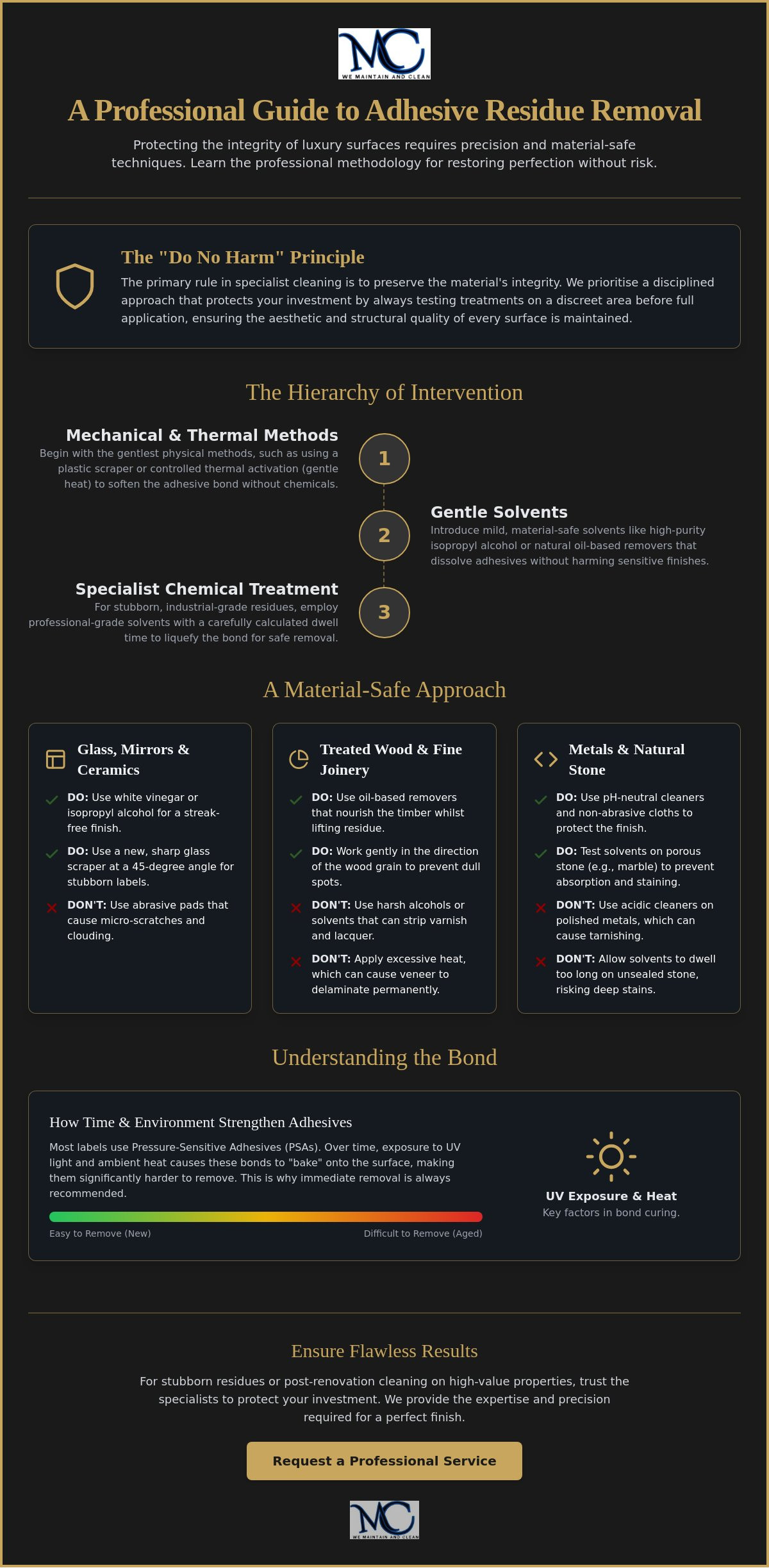
We always operate under the "Do No Harm" principle. This involves testing any treatment on a hidden area before proceeding with a full application. It's a disciplined approach that ensures the preservation of your property's aesthetic integrity and prevents accidental damage to expensive installations.
The Risk of Chemical Incompatibility
Using the wrong solvent can have devastating effects on high-value materials common in London’s premium postcodes. Harsh chemicals can melt acrylic finishes or permanently strip the lustre from bespoke lacquered joinery. Unsealed natural stones like marble are particularly high-risk because they can absorb dissolved adhesives, leading to deep-seated staining. A professional adhesive removal service prioritises the underlying material's safety by calculating the precise dwell time. Dwell time is the specific window required for a solvent to liquefy the adhesive bond before it is safely wiped away.
Safe Methods for Common Household and Luxury Surfaces
Preserving the integrity of high-end finishes requires a disciplined hierarchy of intervention. We always begin with the gentlest possible method before escalating to specialised solvents. This staged approach ensures that the bond is broken without compromising the underlying material's aesthetic or structural quality. When dealing with bespoke interiors, rushing the process often leads to irreversible damage.
Polished metals, such as stainless steel or brass, demand extreme caution. Using abrasive pads or acidic cleaners can cause permanent tarnishing or micro-scratching that dulls the metal's natural lustre. Instead, we focus on maintaining the original colour and texture whilst effectively lifting the tack. If your property features extensive custom metalwork, our professional adhesive removal service provides the precision needed to restore these surfaces to their intended glory.
Glass, Mirror, and Glazed Ceramics
Achieving a streak-free finish on architectural glass requires more than just a standard cleaner. We recommend using white vinegar or high-purity isopropyl alcohol to dissolve residue without leaving a cloudy film. For stubborn labels on new window installations, a new, sharp glass scraper used at a precise 45-degree angle is essential. This technique allows for mechanical lifting without scratching the pane or damaging the delicate perimeter seals.
Treated Wood and Fine Joinery
Fine joinery is susceptible to chemical stripping. Wood is often finished with sensitive varnishes or oils that harsh alcohols can instantly dissolve. We utilise oil-based removers that penetrate the adhesive whilst nourishing the timber. It is vital to follow the natural direction of the wood grain during the removal process to prevent unsightly dull spots. We strongly advise against using heat guns on veneered surfaces; excessive temperature can cause the glue layer beneath the veneer to fail, leading to permanent delamination.
Professional Techniques for Stubborn Residue
Eliminating industrial-grade residue requires a methodical approach that balances efficacy with surface safety. While previous sections outlined the importance of surface sensitivity, this sequence details the exact execution used by a professional adhesive removal service to restore aesthetic perfection. Each step is designed to minimise friction and prevent the accidental degradation of high-value finishes.
Step 1: Mechanical Lifting. Use a plastic spatula or a blunt plastic edge to gently lift the corners of the adhesive. Avoid metal tools at all costs; they're likely to gouge or scratch premium surfaces.
Step 2: Thermal Activation. Apply heat using a hairdryer on a low setting to soften the adhesive matrix. This makes the bond pliable and significantly reduces the force required to peel it away.
Step 3: Solvent Application. Apply your chosen solvent to a high-quality microfibre cloth. Dab the area with precision; don't rub, as this can spread the liquified glue.
Step 4: Neutralisation. Once the tack is removed, clean the area with a mild pH-neutral detergent. This step ensures no chemical residue remains to attract dust or cause long-term discolouration.
The Role of Isopropyl Alcohol and Specialist Solvents
For electronics and non-porous surfaces, 70% isopropyl alcohol is the gold standard because it evaporates quickly without leaving a residue. In kitchen environments, citrus-based solvents offer superior degreasing properties that break down organic adhesives without the need for harsh fumes. It's vital to avoid vigorous rubbing on porous materials like stone or unsealed wood. Mechanical rubbing can drive liquified adhesive deeper into the surface grain, leading to permanent staining that's almost impossible to reverse.
Advanced Tools: Microfibre vs Abrasive Pads
Precision tools are essential for preserving a property's value. You should avoid magic erasers on glossy or lacquered finishes because their micro-abrasive structure acts like ultra-fine sandpaper, permanently dulling the shine. Instead, select a high-GSM microfibre cloth specifically engineered for delicate surface preservation. For isolated spots, a rolling technique using your fingertips can safely lift glue balls away from the surface without the need for additional chemicals. If you require a comprehensive solution for a large-scale project, our professional adhesive removal service ensures every surface is handled with expert care.
Protecting Your Investment: Prevention and Specialist Care
The most effective preservation strategy begins the moment new fixtures are installed. We recommend removing manufacturer stickers immediately upon delivery. Leaving these labels in place allows UV light to "bake" the adhesive, creating a bond that is significantly harder to break without risking the surface finish. Proactive removal ensures that the adhesive matrix doesn't have time to harden or chemically bond with the underlying material.
When dealing with extensive property updates, a comprehensive after builders cleaning programme is essential. These services are specifically designed to handle large-scale adhesive removal across multiple surfaces. This approach ensures that protective tapes and industrial residues are cleared systematically before they can cause permanent damage or attract post-construction dust.
Post-Renovation Adhesive Challenges
New appliances and high-performance glazing often arrive with protective films. If these are left exposed to the sun for extended periods, they can leave behind a phenomenon known as "ghosting". This occurs when the adhesive chemically reacts with the surface finish, leaving a permanent silhouette even after the physical residue is gone. For high-value London refurbishments, professional intervention is the only way to mitigate these risks. Our professional adhesive removal service identifies these potential issues early, using specialised techniques to prevent ghosting from becoming a permanent flaw in your interior design.
The Maintain Clean Ltd Approach to Surface Integrity
We believe that property stewardship should never compromise the health of your home environment. Maintain Clean Ltd is committed to using eco-friendly, non-toxic solvents that respect your space whilst delivering superior results. We provide a meticulous, zero-scratch guarantee, offering peace of mind to clients who value aesthetic perfection and professional integrity above all else.
Integrating detailed residue checks into your regular luxury cleaning service schedule ensures that no sticky patches remain to attract grime. We invite you to delegate these complex tasks to our expert team in London and Essex. By choosing a professional adhesive removal service, you ensure your architectural investments are preserved with the highest standards of care and precision.
Restoring Perfection to Your Bespoke Interiors
Preserving the aesthetic integrity of a luxury property requires more than just effort; it demands a scientific understanding of material compatibility. You've seen how a disciplined approach prevents the permanent degradation of fine joinery, architectural glass, and natural stone. By prioritising the gentlest interventions and using precision tools like high-GSM microfibre, you can eliminate residues without compromising the original finish. Professional stewardship ensures that your architectural investments remain as pristine as the day they were installed.
Founded in 2019 with a steadfast commitment to luxury standards, Maintain Clean Ltd specialises in discreet, high-end residential housekeeping. We serve London, Essex, and the Southeast with a focus on professional integrity and meticulous detail. Whether you're managing a post-renovation restoration or maintaining a curated space, our professional adhesive removal service ensures every surface remains flawless and residue-free. We take the stress out of property management by applying the same level of care to your finishes as you did during their selection.
Don't let stubborn adhesives detract from the beauty of your home. Discover our meticulous property care services and experience the calm confidence that comes with expert stewardship. Your surfaces deserve nothing less than the highest level of protection.
Frequently Asked Questions
Is WD-40 safe to use for removing sticker residue on all surfaces?
WD-40 is not universally safe and should be strictly avoided on porous materials such as natural stone, unsealed timber, or fabrics. Whilst it is effective on certain non-porous metals, the lubricant can leave permanent oily stains on marble or limestone that are incredibly difficult to extract. Always opt for a specialist solvent or a professional adhesive removal service when dealing with high-value, absorbent finishes to ensure the material's integrity remains uncompromised.
How do I get sticker residue off wood without ruining the varnish?
To protect varnished wood, you should use refined oil-based cleaning agents rather than harsh alcohols or acetones which can instantly strip the finish. Applying a small amount of mineral oil or a specialist wood-safe solvent to a microfibre cloth allows you to gently dissolve the bond without chemical abrasion. Ensure you wipe in the direction of the wood grain to maintain the original lustre and prevent the formation of unsightly dull spots on the joinery.
Can I use a hairdryer to remove old, baked-on stickers from a window?
You can use a hairdryer on a low heat setting to soften baked-on stickers, but you must avoid concentrated high temperatures. Excessive heat can cause thermal stress in architectural glass or permanently damage the delicate perimeter seals of double-glazed units. Once the adhesive is pliable, use a plastic scraper at a 45-degree angle to lift the residue safely. This controlled approach mirrors the precision used by a professional adhesive removal service to restore clarity to glazing.
What is the best way to remove adhesive from delicate electronics or laptop lids?
The most reliable method for electronics is using 70% isopropyl alcohol applied to a lint-free microfibre cloth. Never apply liquids directly to the device; instead, dampen the cloth and use a gentle dabbing motion to lift the tack. This prevents moisture from seeping into the internal hardware whilst ensuring a streak-free, professional finish on magnesium, aluminium, or high-grade plastic laptop lids without leaving a sticky film behind.
Will nail polish remover (acetone) damage my plastic surfaces?
Acetone will almost certainly damage most plastic surfaces by melting or etching the material's top layer. It is a powerful solvent that reacts aggressively with common polymers, leading to permanent clouding, discolouration, or structural softening. For plastic fixtures and acrylics, it is far safer to use a mild, citrus-based cleaner or a pH-neutral detergent that respects the surface integrity rather than risking the irreversible damage caused by household solvents.
Comments