
Professional Upholstery Cleaning: The Premium Guide to Fabric Preservation in 2026
Updated: May 31
Your bespoke velvet sofa or designer armchair is far more than a simple seating arrangement; it's a significant capital investment that defines the character of your living space. You likely recognise that maintaining such pieces requires more than a casual vacuuming, yet the fear of a botched DIY attempt or harsh chemicals ruining delicate fibres often leads to understandable hesitation. This is where professional upholstery cleaning transforms from a reactive chore into a sophisticated preservation strategy. By choosing expert intervention, you ensure that your most cherished furniture retains its original texture and colour without the risk of permanent damage.
In this premium guide, you'll discover how the latest fabric care methodologies protect both your home's aesthetic and your family's health. We'll examine the impact of the August 2026 GB Mandatory Classification and Labelling requirements on cleaning safety and explain how the ANSI/IICRC S300 standards dictate modern excellence. You'll learn how precise, eco-friendly maintenance can reduce indoor allergens by up to 80%, effectively extending the lifespan of your luxury furnishings whilst creating a pristine, sanitised environment for your household.
Key Takeaways
Learn how microscopic grit causes structural damage to fabric and why professional upholstery cleaning is the only effective way to stop this "sandpaper" effect.
Identify whether your luxury pieces require Hot Water Extraction or specialised dry cleaning to prevent water-marking on delicate materials like silk or velvet.
Understand the health benefits of sanitising mattresses to eliminate deep-seated allergens and dust mites that accumulate in the most overlooked areas of the home.
Recognise the specific risks of DIY hire machines, including the "browning" effect caused by over-wetting natural cotton and linen fibres.
Discover the essential role of fibre identification tests in ensuring every cleaning treatment is perfectly calibrated to your furniture's unique requirements.
Table of Contents
Understanding the Science of Professional Upholstery Cleaning
Deep Cleaning Methods: Steam vs. Dry Cleaning for Luxury Fabrics
Beyond the Sofa: The Vital Role of a Professional Mattress Cleaner
Protecting Your Investment: Why DIY Methods Risk Delicate Fibres
The Maintain Clean Standard: Bespoke Care for Kent and London Homes
Understanding the Science of Professional Upholstery Cleaning
Preserving the value of luxury furniture requires a shift in perspective. It's helpful to view professional upholstery cleaning not as an occasional remedy for spills, but as a disciplined preservation strategy. Whilst standard domestic vacuuming removes surface debris, it cannot reach the deep-seated contaminants that settle within the weave. A professional approach involves a systematic protocol designed to extract these hidden elements without compromising the delicate structure of the textile. This standard of care is mirrored by leading specialists across the country; for example, Carpet Cleaner In Manchester applies these same industrial-grade protocols to ensure deep-seated contaminants are removed safely from both residential and commercial interiors.
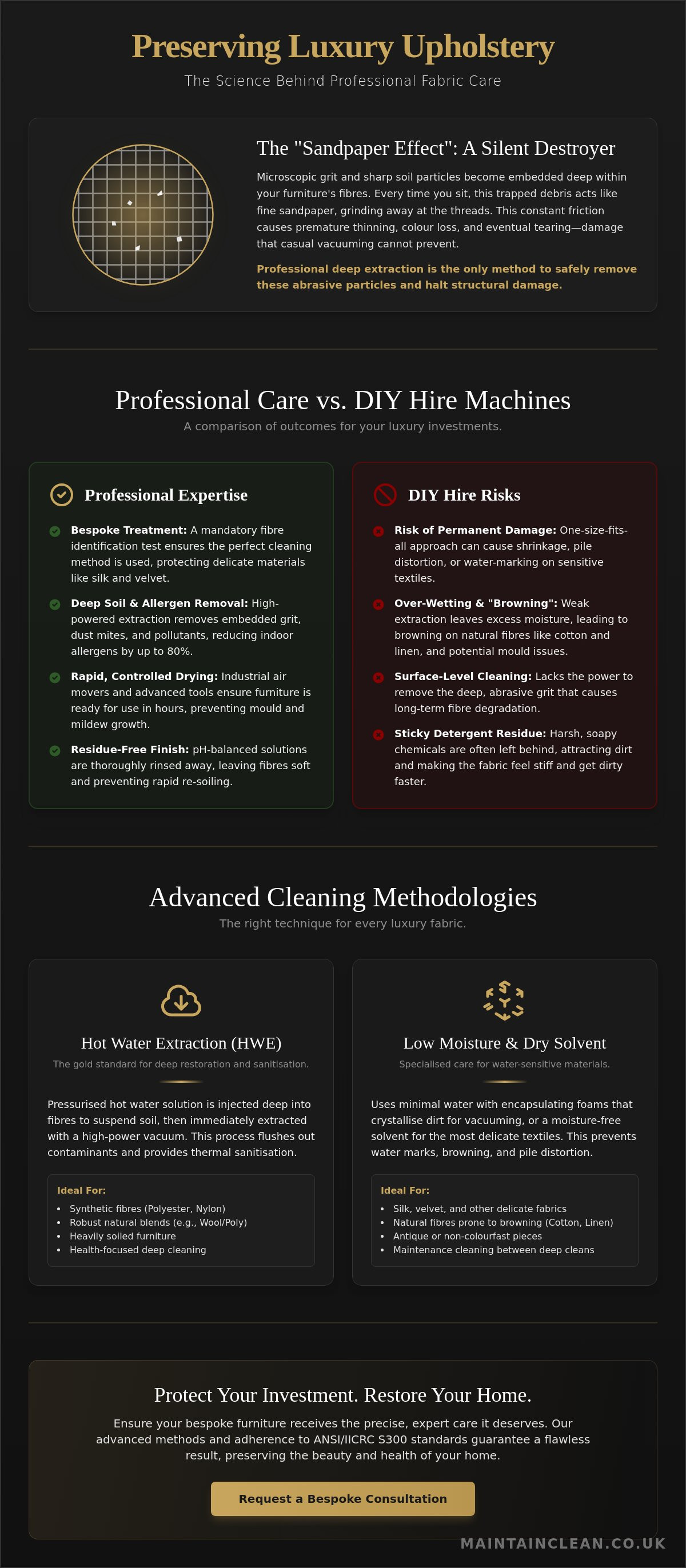
Microscopic grit is the silent enemy of fine fabrics. These tiny, jagged particles migrate deep into the furniture's foundation, acting like sandpaper against delicate fibres whenever the piece is used. Over time, this friction shears the threads, leading to premature thinning and structural failure. Utilising advanced Deep Cleaning Methods ensures these abrasive elements are removed before they can cause permanent damage. Beyond physical debris, soft furnishings act as a secondary filter for the home, trapping Volatile Organic Compounds (VOCs) and household pollutants amongst the fibres. Professional extraction is the only way to purge these trapped particles and restore the furniture's integrity.
The Impact of Hidden Contaminants
Luxury fabrics are susceptible to more than just dust. Skin oils and perspiration naturally transfer to armrests and headrests, where they begin to oxidise. This chemical reaction causes the fabric colour to dull and yellow over time, often becoming permanent if left untreated. Additionally, dust mites thrive in the warm, protected environment of deep upholstery, significantly degrading indoor air quality. Soil suspension is the chemical and mechanical process of detaching these complex contaminants from the fibres so they can be safely rinsed away without leaving a residue.
Preserving Textile Integrity
Professional maintenance is essential for protecting the "hand", or the specific tactile feel, of premium textiles. Natural fibres like wool, cotton, and silk are highly sensitive to moisture and chemistry. Using the wrong pH-balanced cleaning solutions can "burn" natural fibres, causing them to become brittle or lose their lustre. Regular intervention prevents the permanent "greying" often seen in high-traffic areas, where oils and grit have bonded so tightly to the fibre that they become part of the textile's appearance. By maintaining a neutral pH and removing oily binders, professional care ensures your investment feels as luxurious as the day it was delivered.
Deep Cleaning Methods: Steam vs. Dry Cleaning for Luxury Fabrics
Selecting the correct methodology is the cornerstone of delicate fabric preservation. It's a technical decision that balances intensive soil removal with the structural safety of the piece. Professional upholstery cleaning begins with a rigorous identification of the fibre type to determine whether Hot Water Extraction (HWE), Low Moisture, or a dry solvent approach is appropriate. Misjudging this can lead to permanent damage. Natural wool and linen blends require strict temperature control to avoid shrinkage. Meanwhile, luxury velvets and silks often require a moisture-free environment to prevent water-marking and pile distortion.
High-end professional upholstery cleaning now incorporates industrial-grade air movers and rapid-drying technologies. In 2026, these systems significantly minimise household disruption, allowing furniture to be back in use within hours rather than days. This efficiency is achieved through advanced moisture extraction tools that leave only the faintest trace of dampness. These tools are often paired with low-moisture encapsulating foams that trap dirt in a crystallised form, which is then safely extracted without saturating the furniture's internal padding.
Hot Water Extraction: The Deepest Restore
HWE remains the gold standard for deep-fibre restoration. The process involves injecting a pressurised cleaning solution into the fabric, followed immediately by high-vacuum extraction. It's the most effective choice for synthetic fabrics and robust natural blends that can withstand moisture. Beyond the obvious aesthetic improvement, the high-temperature steam provides essential sanitisation. This thermal energy neutralises bacteria and microscopic pollutants that have settled deep within the furniture's structure, ensuring a truly hygienic living environment.
Dry Solvent Cleaning for Delicate Fibres
Moisture-sensitive fabrics like viscose, rayon, and pure silk demand a specialised "no-water" methodology. Dry solvents dissolve oily binders and lift surface soils without affecting the structural tension of the weave. This prevents the "browning" effect or texture hardening often associated with improper water use. Current UK standards, updated for the August 2026 GB Mandatory Classification and Labelling requirements, prioritise eco-friendly solvents that are both effective and environmentally responsible. These biodegradable fluids ensure a premium finish without the harsh chemical odour of legacy products. If you require assistance in identifying your furniture's specific needs, the team at maintainclean.co.uk offers bespoke fibre testing for every project.
Beyond the Sofa: The Vital Role of a Professional Mattress Cleaner
The mattress is arguably the most critical upholstered item in a luxury residence, yet it remains the most frequently overlooked. Whilst we spend roughly a third of our lives in direct contact with its surface, it rarely receives the same level of attention as a designer sofa or a bespoke armchair. Integrating the bedroom into your scheduled professional upholstery cleaning is a vital step in maintaining a truly pristine home environment. Over time, mattresses become reservoirs for dead skin cells, perspiration, and microscopic pollutants that penetrate far beyond the reach of a domestic vacuum cleaner.
Standard household equipment lacks the suction power and specialised filtration necessary to address the build-up within deep foam or pocket-sprung layers. This accumulation creates an ideal breeding ground for dust mites, which are a primary trigger for respiratory issues and skin irritations. By treating the mattress with the same technical precision as your main living area furniture, you ensure that your private sanctuary remains as hygienic as it is comfortable. A disciplined approach to mattress maintenance is a cornerstone of high-end property management.
The Science of Sleep Hygiene
Maintaining an impeccably clean sleeping surface is fundamental to respiratory health and overall well-being. A professional mattress cleaner utilises high-powered extraction technology to remove allergens from deep within the mattress layers. This process is often supplemented by specialised anti-allergen sprays or UV-C light treatments to neutralise dust mite populations effectively. Research indicates that properly cleaned upholstery and bedding can reduce indoor allergens by up to 80%, providing significant relief for those with sensitivities. Whilst some industry reports suggest a mattress can significantly gain weight over a decade due to debris accumulation, the immediate focus remains on the air quality you breathe every night.
Stain and Odour Neutralisation
Professional care addresses both visible and invisible contaminants through scientific application. Organic stains are treated with advanced enzyme-based solutions that break down proteins at a molecular level, ensuring a thorough restoration of the fabric without damaging the ticking. Unlike retail deodorising sprays that merely mask unpleasant scents with heavy synthetic perfumes, professional-grade neutralisers eliminate the source of the odour entirely. This results in a truly fresh environment that supports superior sleep quality. For optimal hygiene and to preserve the structural integrity of your investment, we recommend a professional sanitisation every six to twelve months. This routine ensures your sleeping environment remains as refined and healthy as the rest of your property.
Protecting Your Investment: Why DIY Methods Risk Delicate Fibres
The allure of a weekend hire machine often masks the significant risks to high-value upholstery. Whilst these rental units are marketed as a cost-effective solution, they lack the calibrated suction power and temperature stability of an industrial plant. Using underpowered equipment frequently leads to saturation. This is particularly dangerous for natural textiles like cotton and linen. When these fibres remain damp for too long, a chemical reaction known as "browning" occurs; this unsightly discolouration is often permanent and impossible to reverse without specialist intervention. Professional upholstery cleaning avoids these pitfalls by using high-lift vacuum systems that ensure minimal moisture remains in the fabric.
Mechanical damage is another common consequence of amateur attempts. Many homeowners mistakenly believe that vigorous scrubbing is necessary to lift a stubborn stain. However, aggressive agitation can "burst" the pile of delicate fabrics like velvet or chenille. This creates a fuzzy, worn appearance that ruins the textile's original lustre. Furthermore, high-alkaline supermarket detergents are often too harsh for luxury blends. These chemicals can strip the natural oils from wool or cause the dyes in silk to bleed, resulting in a patchy and degraded finish that devalues the entire furniture piece.
The Risk of Over-Wetting and Mould
Excess water is a primary catalyst for structural failure. When moisture seeps past the surface fabric and into the internal padding and wooden frame, it creates a stagnant environment where mildew thrives. Over-wetting can cause wooden sofa frames to warp or rot, compromising the furniture's stability. Professional technicians utilise moisture sensors to monitor the fabric's state throughout the process, ensuring that the internal components of your investment remain perfectly dry and protected from fungal growth.
Chemical Residues and Rapid Re-soiling
Standard retail cleaners often leave behind a sticky, high-alkaline residue. This soap acts as a magnet for new dirt, causing the fabric to re-soil significantly faster than before. A critical stage in professional care is the "rinse and neutralise" phase, which returns the fabric to a neutral pH and removes every trace of cleaning agent. For a deeper look at maintaining your furniture between visits, consult our ultimate guide to sofa cleaning. To ensure your home receives this level of technical precision, you can book a professional assessment with Maintain Clean today.
The Maintain Clean Standard: Bespoke Care for Kent and London Homes
Maintain Clean operates with a disciplined, four-stage protocol: Assessment, Testing, Extraction, and Protection. This structured approach ensures every piece of furniture receives the precise care it requires. Before any liquid or chemical solution touches a luxury fabric, our technicians perform a rigorous fibre identification test. This step is non-negotiable. It allows us to distinguish between natural and synthetic fibres, ensuring the cleaning chemistry is perfectly balanced to the textile's pH requirements. By identifying the exact composition of the weave, we eliminate the risk of dye bleed or texture damage, providing a level of reliability that standard services cannot match.
Our technicians are trained to operate with the utmost discretion. In luxury residential settings, we understand that privacy and professional integrity are as important as the results themselves. Every project is handled with quiet excellence, ensuring minimal disruption to the household whilst maintaining the highest standards of property stewardship. This commitment to precision and care is why professional upholstery cleaning with Maintain Clean is regarded as a hallmark of quality amongst the region's most discerning homeowners.
Tailored Solutions for the Southeast
Maintain Clean serves a sophisticated clientele across the Southeast, providing specialised care for luxury estates in Kent and premium residences in central London postcodes. We understand the complex requirements of managing high-value properties. To streamline maintenance, many clients choose to integrate their upholstery care with our luxury cleaning services in London. This comprehensive approach ensures every aspect of the interior is preserved at a superior level. For busy estate managers and homeowners, we offer flexible scheduling, including weekend or evening appointments, to ensure our presence aligns seamlessly with your lifestyle.
The Finishing Touch: Grooming and Protection
The final stage of our methodology involves "piling" or grooming the fabric. This technical process ensures the fibres are set in a uniform direction, restoring the textile's aesthetic lustre and preventing texture distortion as it dries. Once groomed, we apply premium fluoropolymer protectors. These advanced solutions create an invisible barrier that repels spills and oily contaminants, significantly extending the interval between professional cleans. This proactive protection is essential for preserving the structural and aesthetic integrity of your investment over the long term. We invite you to contact Maintain Clean for a bespoke textile assessment and to witness our unique preservation methodology first-hand.
Securing the Future of Your Luxury Interiors
Maintaining a refined home requires a disciplined approach to textile care. You've now seen how microscopic grit acts as a hidden abrasive force and why precise fibre identification is the only way to prevent permanent damage like browning or texture loss. Professional upholstery cleaning is no longer just about removing a visible mark; it's a vital strategy for extending the life of your furniture and ensuring a healthy, sanitised living environment. By moving away from risky DIY methods and embracing technical preservation, you protect the structural integrity of your most significant investments.
Since 2019, Maintain Clean has served the most exclusive postcodes in London and luxury estates across Kent. Our Certified Fibre Care Specialists use eco-friendly and non-toxic solutions to deliver meticulous results without compromising your family's safety or the environment. We invite you to experience our unique methodology and restore the original lustre of your cherished pieces. Request a Bespoke Upholstery Assessment from Maintain Clean today and ensure your home remains a pristine sanctuary for years to come.
Frequently Asked Questions
How long does professional upholstery cleaning take to dry?
Most luxury fabrics dry within four to six hours when treated with advanced Hot Water Extraction. If your furniture requires a specialised dry solvent methodology, the piece is often ready for use almost immediately. We utilise industrial-grade air movers and high-lift moisture extraction technology to ensure your living space is restored to full functionality with minimal delay.
Is professional upholstery cleaning safe for pets and children?
Yes, the solutions we use are non-toxic and specifically formulated to be safe for every member of your household. Our products comply with the August 2026 GB Mandatory Classification and Labelling requirements, ensuring the highest standards of safety and environmental responsibility. You don't have to worry about harsh chemical odours or irritating residues being left behind in your home.
Can you remove old, "set-in" stains from my designer sofa?
Success depends on the fabric composition and the nature of the spill, but professional intervention significantly increases the likelihood of total removal. We use specialised enzyme-based treatments and targeted chemistry to break down molecular bonds in old stains. Whilst some permanent fibre damage can occur if a stain is left for years, our technicians often achieve remarkable restoration on pieces previously thought to be ruined.
How often should I book a professional upholstery cleaning service?
We recommend a professional sanitisation every six to twelve months to maintain both the aesthetic and structural integrity of your furniture. High-traffic items or pieces in homes with pets may require more frequent attention to prevent the "greying" effect caused by bonded oils. Regular maintenance is a proactive investment that prevents deep-seated grit from causing permanent fibre failure over time.
Will professional cleaning help with my household allergies?
Professional upholstery cleaning can reduce indoor allergens by up to 80%, providing a much healthier living environment for those with sensitivities. Our high-powered extraction systems remove dust mites, pet dander, and pollen that settle deep within the fabric weave and internal padding. This process goes far beyond the capabilities of a domestic vacuum, directly improving the air quality within your residence.
Do you clean delicate fabrics like silk, viscose, or velvet?
Yes, we specialise in the preservation of highly sensitive textiles including pure silk, viscose, and luxury velvet. These materials require a moisture-free dry solvent approach to prevent water-marking or pile distortion. Every project begins with a fibre identification test to ensure the cleaning method is perfectly calibrated to your furniture's unique requirements and manufacturer guidelines.
What is the difference between professional cleaning and a hire-machine?
Industrial equipment provides significantly higher suction power and precise temperature control that rental machines simply cannot match. Hire-machines often leave fabrics over-saturated, which leads to browning, mildew, and structural warping of wooden frames. Additionally, professional upholstery cleaning involves neutralising rinses to ensure no sticky soap residue remains to attract new dirt, keeping your furniture cleaner for longer.
Do I need to move my furniture before the cleaners arrive?
You don't need to undertake any heavy lifting before our arrival. Our technicians handle the careful movement of standard furniture items to ensure a comprehensive clean of all surfaces and the floor beneath. We simply ask that you remove fragile ornaments, electronics, or small decorative items from the immediate area to allow for a seamless and efficient service in your home.


Comments