
Specialist Stain Removal in London: The 2026 Guide to Interior Restoration
Imagine watching a glass of red wine tilt towards your £12,000 hand-woven silk rug. In that moment, for residents across the Southeast of England and Kent, the primary concern isn't just the immediate mess, but whether the material can ever be restored through services matching the standard of specialist stain removal London without incurring permanent damage. It's a valid fear, especially when generic supermarket cleaners or conflicting online advice often turn a simple spill into a permanent blemish.
At Maintain Clean Ltd, we understand that maintaining a luxury interior requires more than basic upkeep; it demands a forensic approach to preservation. This guide provides the professional framework you need to identify, treat, and eliminate stubborn marks whilst protecting the molecular integrity of your surfaces. You'll discover the critical steps to take in the first ten minutes of an accident and learn how the 2026 CLP chemical regulations ensure a safer, more ethical approach to property care. We'll also outline exactly what to look for when hiring a specialist to ensure your home remains a sanctuary of high standards and precise craftsmanship.
Key Takeaways
Understand the impact of London’s high mineral water content on fibre saturation and why preserving the host material's integrity is the priority during restoration.
Master the forensic identification protocol to accurately categorise spills into protein, tannin, oil, or synthetic groups before any treatment begins.
Protect your investment by following the professional first-response protocol, prioritising precise blotting over rubbing to prevent permanent fibre distortion.
Gain confidence in commissioning specialist stain removal London by understanding how pH-balanced chemistry and molecular solvents safely dissolve marks without damaging luxury fabrics.
Learn how to integrate targeted restoration into a broader property maintenance strategy to ensure the long-term preservation of historical and high-value London estates.
Table of Contents
The Anatomy of a Spill: Why London Interiors Require Specialist Care
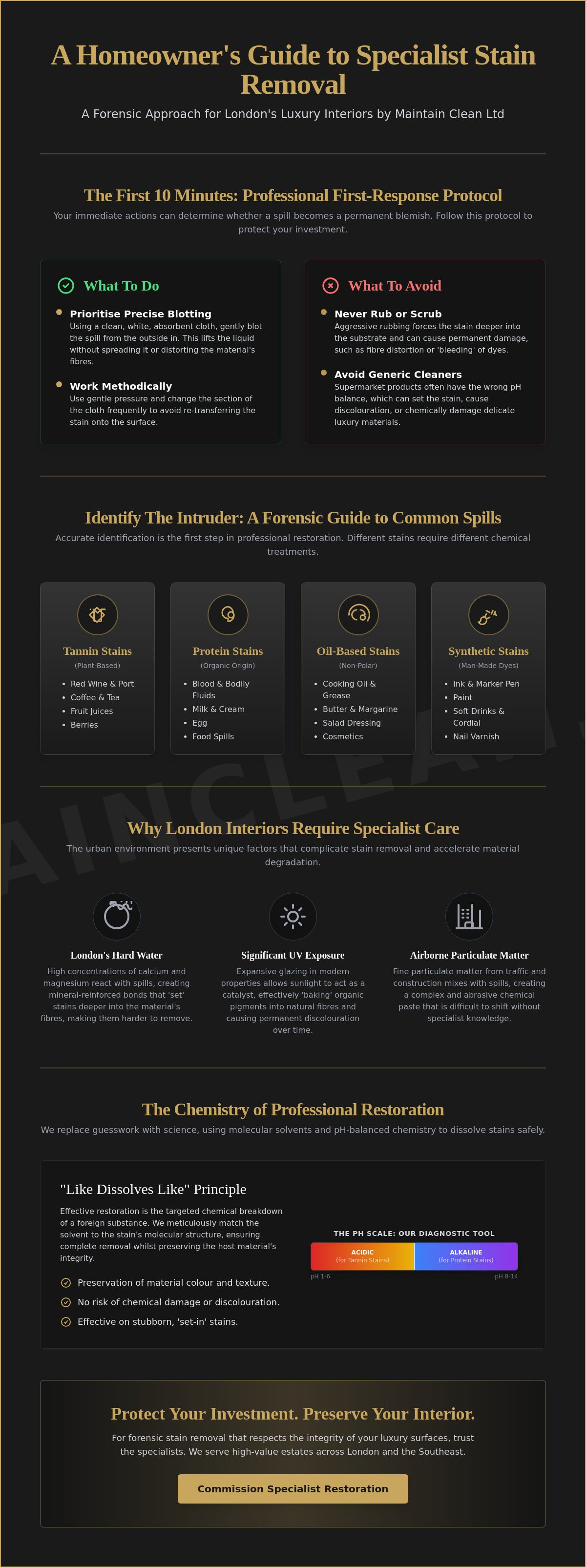
True restoration begins with understanding that a stain is a chemical bond rather than a surface level blemish. Within the context of a high end property, specialist stain removal London is defined as the targeted chemical breakdown of a foreign substance whilst meticulously preserving the host material's integrity. It's a forensic process. Unlike generic cleaning, which often relies on aggressive abrasion, professional restoration utilises The Chemistry of Stain Removal to dissolve the intruder at a molecular level without compromising the delicate fibres of a silk rug or the finish of a bespoke sofa.
London’s unique environment presents specific challenges for interior preservation. The city's hard water is a primary culprit. High concentrations of calcium and magnesium minerals don't just affect plumbing; they interact with liquid spills to create mineral-reinforced bonds that "set" the stain deeper into the substrate. Additionally, the expansive glazing in modernised London townhouses allows significant UV exposure. This light acts as a catalyst, essentially baking organic pigments into natural fibres and making them increasingly resistant to standard treatments over time.
Homeowners often encounter the "Invisible Stain" phenomenon. This occurs when a spill, such as white wine or a clear soft drink, appears to vanish upon initial blotting. However, the residual sugars remain trapped within the material. As these sugars oxidise and attract urban particulate matter, they eventually reappear as stubborn, dark patches that are far more difficult to extract than the original liquid.
The Role of Material Porosity
Luxury materials require a nuanced understanding of absorption. Open-grain wood and natural stones like marble or limestone are highly porous, acting like a structural sponge that draws contaminants deep below the surface. In deep-pile luxury carpets, we often observe the "wicking" effect. This happens when a liquid travels to the base of the carpet and then rises back to the tips of the fibres during the drying process, causing the stain to return. Hand-dyed oriental rugs and bespoke upholstery are particularly vulnerable to "bleeding", where the wrong pH level in a cleaning agent causes the original dyes to migrate and blur.
London Environmental Factors
The urban atmosphere in London introduces pollutants that alter how a spill behaves. Fine particulate matter from traffic and construction can mix with a fresh spill, creating a complex chemical paste that is difficult to shift. Central heating systems further complicate matters by accelerating evaporation rates, which reduces the window of opportunity for effective treatment. In the humid micro-climates of historical London basements, rapid response is essential to prevent organic stains from developing into permanent mould or mildew colonies within the material's core.
The Chemistry of Restoration: How Specialists Undo the Damage
Effective restoration is never a matter of luck. It's a disciplined application of molecular science. At the heart of specialist stain removal London lies the "Like Dissolves Like" principle. This fundamental rule of chemistry dictates that a solvent must share a similar molecular structure with the substance it aims to dissolve. A polar substance, such as coffee, requires a polar solvent like water. Conversely, non-polar contaminants like oil or grease require specialised dry solvents to break their bond with the surface. Without this precise matching, the stain remains untouched or, worse, spreads further into the substrate.
The pH scale is our primary diagnostic tool. Different contaminants respond to specific levels of acidity or alkalinity. Tannin based stains, including tea, wine, and many fruit juices, are typically treated with acidic solutions to neutralise the pigment. Protein based spills, such as blood, egg, or milk, require alkaline treatments to break down the complex organic structures. Getting this balance wrong can lead to permanent discolouration. We also utilise surfactants to lower the surface tension of the cleaning solution. These agents act as molecular wedges, slipping between the stain and the fibre to lift the contaminant away without the need for aggressive scrubbing that damages delicate materials. For those managing high value properties, ensuring your carpet and upholstery cleaning is handled with this level of chemical precision is essential for long term preservation.
Temperature control is equally vital. Whilst heat can accelerate chemical reactions, it's a double edged sword. Applying hot water to a protein based stain will denature the proteins, essentially cooking them into the fibres and making them impossible to remove. Professional specialists carefully calibrate the temperature of their extraction equipment to suit both the stain type and the material's heat tolerance.
Solvent vs. Aqueous-Based Treatments
Determining the correct carrier for the cleaning agent is a critical decision. Dry cleaning solvents are the preferred choice for oil based spills, such as makeup, butter, or ink, as they dissolve the grease without affecting the material's shape. Water based, or aqueous, extraction is highly effective for most organic matter. However, specialists must manage the risk of over-wetting. Excessive moisture can lead to secondary issues like cellulosic browning or the growth of mildew within the backing of a carpet. Expert practitioners use high airflow extraction to ensure fibres remain damp for the shortest time possible.
Enzymatic Breakdown and Oxidation
For complex organic residues and lingering odours, we employ bio-enzymatic cleaners. These solutions contain specific enzymes that "digest" organic matter at the source, breaking down proteins, starches, and fats into water soluble components. When dealing with stubborn pigments, the Museum Conservation Institute Guide highlights the importance of controlled oxidation. We use stabilised oxidisers to gently remove the remaining colour without stripping the original dyes from the fabric. Professional-grade stabilisers are used to neutralise chemicals after the stain is gone.
Identifying Your Stain: A Categorised Guide for Homeowners
Accurate diagnosis is the foundation of successful restoration. Professional specialist stain removal London categorises contaminants into four primary groups: protein, tannin, oil, and synthetic pigments. Each group possesses a unique molecular structure that dictates the required chemical response. Applying the wrong agent, such as using a high-heat treatment on a protein spill, can cause a permanent chemical bond that no amount of cleaning can later reverse.
If you didn't witness the spill, a forensic identification test is essential. Start by observing the colour and shape. Tannin stains, such as tea or coffee, usually leave a dark, defined outer ring as they dry. Protein stains like milk or blood often have a duller appearance and may feel stiff to the touch. Oil-based marks, common near dining areas or dressing tables, appear as dark patches that saturate the fibres or stone. Synthetic pigments found in modern cosmetics or ink are often more vibrant and sit on the surface of the material. Use your sense of smell; organic and protein-based residues often have a distinct, slightly sour scent as they begin to oxidise.
Material sensitivity is the next critical factor. A chemical protocol that is safe for a synthetic rug may cause irreversible etching on a marble countertop or a limestone floor. Natural stones are particularly vulnerable to the acidic agents used for tannin removal. We also frequently encounter the "Dye Transfer" challenge, where indigo pigments from denim or dark cushions migrate onto light-coloured leather or velvet. This is not a surface-level issue but a deep migration of dye that requires specialist stain removal London to extract without stripping the host material’s original colour or finish.
Organic and Protein-Based Stains
For blood, sweat, or food residues, cold-water stabilisation is the professional first step. Heat will "set" these proteins, making them permanent. When dealing with red wine on luxury textiles, it is vital to debunk common myths. Adding white wine only introduces more sugar and acid to the area, whilst salt is abrasive and can physically damage delicate fibres. Both methods often complicate the eventual professional extraction process. Pet accidents in high-end residences require immediate attention, as the high pH level of urine can cause permanent "yellowing" and structural damage to wool and silk fibres if left untreated.
Oil, Grease, and Synthetic Pigments
Makeup and cosmetics pose a significant risk due to their high oil content and concentrated pigments. The biggest danger during DIY attempts is smearing, which pushes the pigment deeper into the substrate. Modern ink and toner are equally volatile; their pigments are designed to be permanent and require immediate professional extraction using specific dry solvents. Candle wax on stone or carpet requires a delicate balance. Whilst it may be tempting to use a hot iron, this can drive the wax deeper or scorch the material. Specialists use controlled cooling or precise heat-absorption techniques to lift the wax safely.
The Professional First-Response Protocol: What to Do (and Avoid)
The first sixty seconds following a spill often determine whether a surface can be fully restored or if it will suffer permanent damage. In high-value London properties, where bespoke furnishings and delicate natural fibres are the standard, a disciplined first-response protocol is essential. The most important rule is to blot, never rub. Rubbing creates friction that physically destroys the structure of delicate fibres like silk or wool. This leads to "fuzzing" or permanent distortion that no amount of specialist stain removal London can later correct. Once the physical structure of a fibre is compromised, the aesthetic perfection of the piece is lost forever.
You should strictly avoid supermarket "all-purpose" spot cleaners on luxury fabrics. These products often contain high concentrations of optical brighteners or aggressive surfactants designed for durable synthetic materials. On a high-end wool rug or a velvet sofa, these chemicals can strip original dyes or cause cellulosic browning. Additionally, London’s hard water minerals can react with these generic detergents to create a sticky residue. This residue attracts urban pollution and particulate matter, effectively locking the stain into the material and making professional extraction significantly more complex.
Step-by-Step Emergency Management
Step 1: Carefully remove any solid matter using a blunt edge, such as a spoon, taking care not to push the substance deeper into the weave.
Step 3: Blot excess liquids using high-absorbency white towels, working from the outside of the spill toward the centre to prevent spreading.
Step 3: Perform a patch test with plain, room-temperature water in an inconspicuous area to check for colour fastness.
Use a white microfibre cloth to avoid dye transfer from your cleaning tools to the surface.
Common DIY Mistakes to Avoid
Many homeowners reach for traditional remedies like salt, vinegar, or baking soda. Whilst these might work on basic synthetics, they are disastrous for delicate stone or silk. Vinegar is highly acidic and can etch marble or limestone surfaces instantly, leaving a dull mark that requires professional resurfacing. Salt is abrasive and can tear fragile fibres. Similarly, scrubbing brushes are the enemy of premium velvet and suede; they disrupt the pile and leave visible tracking marks. Never attempt to dry a treated area with a hairdryer or steam mop. Intense heat "locks in" organic pigments and proteins, making them a permanent part of the fabric. If the mark does not respond to gentle blotting with water, it is time to stop. Further DIY effort risks damaging the substrate beyond repair. For immediate assistance with stubborn marks, our team provides professional carpet and upholstery cleaning services tailored to the most demanding London interiors.
The Maintain Clean Standard: Specialist Restoration for London Estates
Achieving a pristine interior requires a transition from reactive spot-cleaning to a disciplined, proactive management strategy. At Maintain Clean Ltd, we integrate specialist stain removal London into a comprehensive house deep cleaning London service. This holistic approach ensures that every surface, from historical cornicing to bespoke silk wallcoverings, receives the same level of forensic attention. For historical and listed London properties, our "Preservation First" methodology is paramount. We recognise that these spaces aren't merely residences but significant architectural investments that require a steward’s touch to maintain their heritage value.
The risks to a luxury interior are often highest during periods of transition or renovation. Post-renovation residues, such as adhesive overspray or fine paint mist, require a level of precision that standard cleaning cannot provide. We handle these complex contaminants as part of our premium after builders cleaning, utilising specific solvents that release construction-grade bonds without etching the underlying material. By addressing these issues early, we protect the long-term return on investment of your interior design. It's about ensuring your property remains in a state of aesthetic perfection.
Bespoke Textile and Surface Care
Our commitment to excellence is supported by industrial-grade extraction systems that far outperform domestic tools. These systems allow for precise pressure and temperature calibration, ensuring deep-seated contaminants are removed whilst keeping drying times to an absolute minimum. Beyond technical proficiency, Maintain Clean Ltd delivers a service built on three core pillars:
Advanced extraction technology tailored for high-value natural fibres.
Absolute confidentiality and discretion for our high-profile residential clients.
A "handover ready" finish that meets the exacting standards of luxury estates.
Total Property Stewardship
Our expertise in specialist stain removal London is deeply integrated with our professional carpet cleaning in Chelsea. We serve London’s most prestigious postcodes, where the expectation is nothing less than flawless. To ensure this standard persists, our final step involves a meticulous buffing and the application of advanced stain-repellent barriers. These breathable shields provide a critical window of opportunity for future spills, preventing them from bonding with the fibres. This level of care reflects our identity as property stewards; we don't just clean spaces, we preserve the integrity and beauty of your home for the years to come.
Securing the Longevity of Your London Interior
Preserving the aesthetic perfection of a luxury residence requires more than basic maintenance; it demands a disciplined understanding of material science and environmental factors. We've explored how identifying the molecular structure of a spill and adhering to a professional protocol can prevent permanent damage to your most valued assets. By moving beyond generic cleaning products and embracing specialist stain removal London, you ensure that even the most stubborn contaminants are eliminated whilst the integrity of the host material remains untouched.
Maintain Clean Ltd stands as a trusted steward for London’s most prestigious estates. Our team specialises in high-end textile and architectural surface restoration, offering a discreet, professional service that respects your personal space. Whether you're dealing with complex organic residues or industrial-grade post-renovation spills, we apply the precise methodology required to achieve a pristine finish. Your interior design is a significant investment; we're here to protect its long-term beauty. Book a Meticulous Restoration for Your Luxury London Interior today and rediscover the confidence that comes with professional care. Your surfaces deserve nothing less than perfection.
Frequently Asked Questions
Can all stains be removed if caught early enough?
While rapid response significantly increases the success rate, certain substances can cause immediate and irreversible chemical changes to natural fibres. Some acidic or highly pigmented liquids can dye the material upon contact, especially on porous surfaces like silk or untreated limestone. Our goal is always to achieve a complete restoration, but the outcome depends on the substance's molecular bond with the host material.
Is it safe to use white wine to remove a red wine stain on a luxury carpet?
No, you should never use white wine to treat a red wine spill. As we discussed earlier, white wine introduces additional sugars and acids into the fibres, which can complicate the professional extraction process. These sugars eventually oxidise and attract particulate matter, leading to dark patches. Stick to gentle blotting with a clean white cloth and plain water until a specialist arrives.
How much does specialist stain removal in London typically cost?
The investment for specialist stain removal London is determined by the material's delicacy, the age of the stain, and the specific solvents required for restoration. Prices are typically quoted per item or per room, reflecting the forensic nature of the work. We recommend requesting a bespoke consultation to ensure the treatment plan is perfectly aligned with the requirements of your high-end interior.
What should I do if a stain has already been "set" by a previous cleaning attempt?
If a stain has been set by heat or improper chemicals, you should cease all DIY attempts immediately. Previous attempts often "lock" the pigment into the fibre, but specialists can sometimes break these bonds using advanced pH-balanced chemistry. It's vital to inform your technician about exactly what products were previously applied so they can adjust their methodology to avoid any adverse chemical reactions.
Are your specialist cleaning chemicals safe for children and pets?
Our restoration processes utilise products that meet the latest UK safety standards, including the August 2026 CLP hazard labelling requirements. We prioritise the use of environmentally responsible and sustainable solvents that provide specialist stain removal London without leaving harmful residues behind. This ensures your home remains a safe, healthy environment for your family and pets whilst maintaining the highest standards of cleanliness.
Can you remove old, "baked-on" stains from marble or natural stone?
Yes, we can often restore natural stone through the use of specific poultices and pH-balanced solvents. Because stone is porous, "baked-on" stains have usually migrated deep into the substrate. Our specialists use a drawing-out process that slowly lifts the contaminant back to the surface. This technique is far safer than aggressive scrubbing, which can permanently etch or dull the finish of your marble or limestone.
How long does a specialist stain removal appointment usually take?
A typical appointment for a single item or a specific area usually lasts between one and three hours. This timeframe allows for the necessary dwell time required for our bio-enzymatic or solvent-based treatments to work effectively. Complex restorations involving multiple surfaces or deep-seated "wicking" issues may require a longer visit to ensure the material is thoroughly stabilised and dried correctly.
Do you provide a guarantee that the stain will be completely gone?
We guarantee the highest standard of professional care and the most effective restoration possible without risking the structural integrity of your furnishings. While we often achieve 100% removal, we prioritise "Preservation First" to ensure your luxury materials aren't damaged by over-treatment. Our reputation is built on professional integrity, and we provide a clear, honest assessment of the expected results before we begin any work.

Comments