
The Ultimate Guide to Sofa Cleaning: Professional Care for Luxury Upholstery in 2026
The longevity of your bespoke velvet sofa depends less on how often you vacuum and more on the molecular science of your chosen sofa cleaner. It's a frustrating reality that a single misplaced drop of water or an incorrect chemical can permanently watermark a luxury fibre, turning a centrepiece into a source of stress. You likely invested in premium upholstery to create a sanctuary of comfort, yet the fear of persistent pet odours or confusing cleaning codes often prevents you from providing the care your furniture deserves.
We understand that maintaining a pristine home requires precision and a deep respect for delicate textiles. This expert-led guide empowers you to master upholstery maintenance with confidence, ensuring your furniture remains a testament to high standards. We'll navigate the complexities of 2026 regulations, such as the latest PFAS bans affecting fabric treatments, and provide a clear framework for handling spills immediately. You'll gain the knowledge to distinguish between safe DIY interventions and the moments when only a professional, meticulous service will suffice to maintain and clean your investment with the discretion your home requires.
Key Takeaways
Identify the specific upholstery cleaning codes (W, S, S/W, X) to ensure you select a compatible sofa cleaner that preserves the integrity of your luxury fabric.
Master the "Golden Rule" of stain removal by using cool treatments and enzyme cleaners to prevent organic spills from becoming permanent.
Learn why meticulous vacuuming and the dabbing technique with microfibre cloths are superior to traditional scrubbing for preventing fibre damage.
Understand the necessity of colour-fastness testing and pH-neutral detergents in maintaining the vibrant appearance of premium upholstery.
Discover how professional fabric protection and annual maintenance cycles create a pristine, allergen-free sanctuary within your home.
Table of Contents
Understanding Your Sofa’s Fabric and Care Labels
Many homeowners assume that a generic, high-street machine provides a universal solution for every upholstery type. This is a dangerous oversimplification. Effective textile maintenance is rooted in science, not just suction power. Achieving a pristine result requires a meticulous approach to Understanding Your Sofa’s Fabric and Care Labels before any moisture touches the surface. Natural fibres such as wool, linen, and cotton are exceptionally absorbent; they retain liquids deep within their structure, which often leads to fibre shrinkage or unsightly water-marking. Conversely, synthetic blends might repel water but can react poorly to the heat or chemicals found in a standard sofa cleaner.
A professional-grade assessment identifies these risks before they become permanent mistakes. We often see luxury pieces compromised by "ringing," where a cleaning agent dries unevenly and leaves a dark perimeter. This occurs because the user didn't account for the specific thirst of the textile. By choosing the correct sofa cleaner and application method, you protect the structural integrity of the weave and ensure the piece retains its original lustre and shape. It's about more than just removing a mark; it's about preserving the investment you've made in your home's aesthetic.
Decoding the Upholstery Care Label
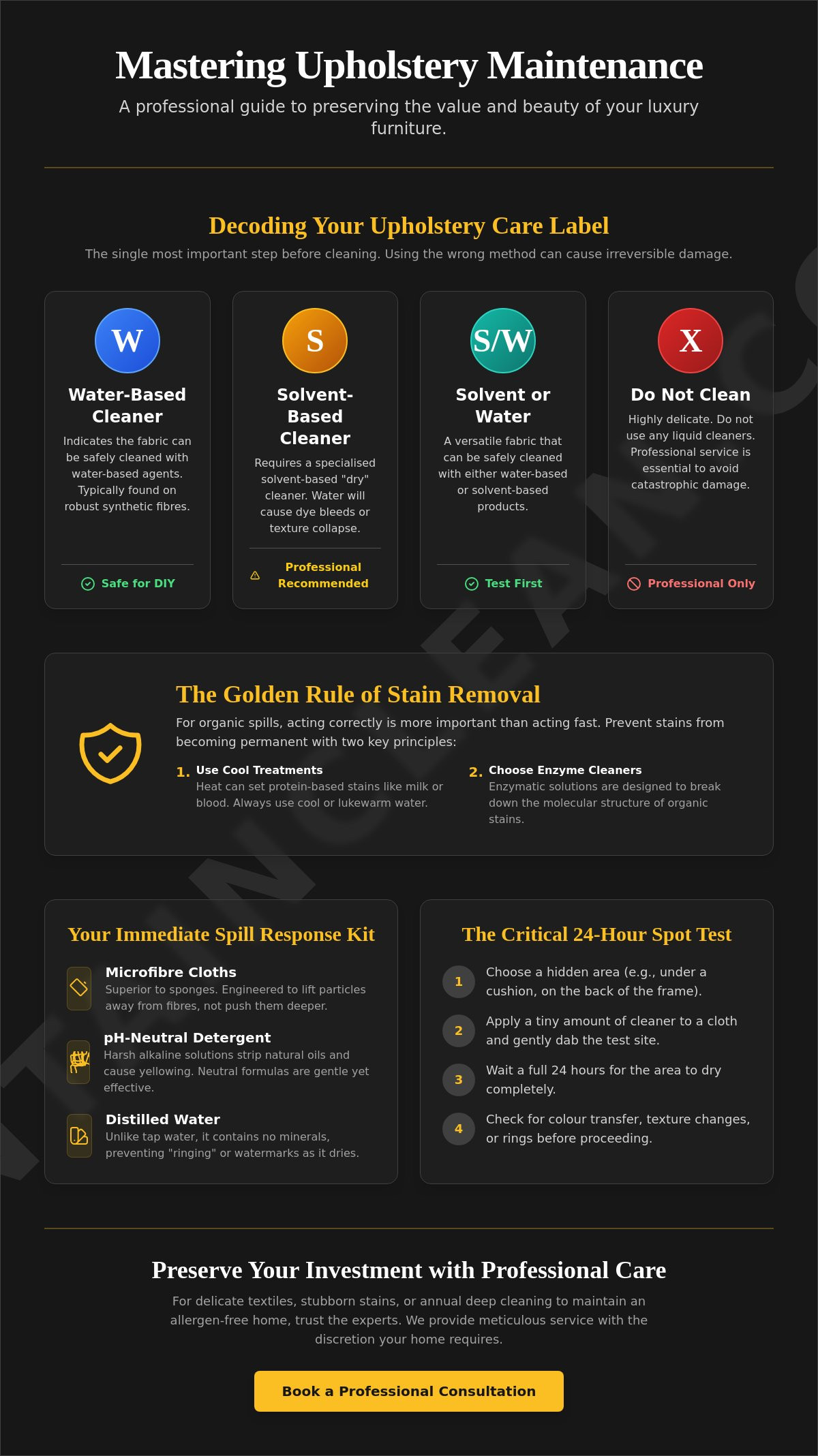
The small tag tucked under your sofa cushions is your primary defence against damage. A "W" code indicates the fabric can tolerate water-based cleaning agents, typically found in robust synthetics. An "S" code is a strict warning; it requires specialised solvent-based "dry" cleaning only. Introducing water to an "S" rated fabric can cause immediate dye bleeds or texture collapse. If you discover an "X" code, the fabric is highly delicate, such as certain silks or antique velvets. In these instances, you should never attempt a DIY refresh. These materials require the precision and discretion of a professional service to avoid catastrophic damage.
How to Perform a Professional Spot Test
Never apply a product to the centre of a stain without a preliminary trial. Identify an inconspicuous area, such as the underside of a rear cushion or the back of the frame. Apply a small amount of your chosen solution to a clean cloth and dab it onto the test site. You must wait a full 24 hours for the area to dry completely. This patience allows you to check for subtle texture changes, colour transfer onto the cloth, or the formation of a "ring" as the liquid evaporates. If the fabric remains soft and the colour is unchanged, you can proceed with confidence, knowing you aren't risking the textile's integrity.
The Essential Sofa Cleaner Toolkit: DIY vs Professional Equipment
Selecting the right sofa cleaner is a decision that determines whether your upholstery lasts five years or fifteen. While retail shelves are stocked with aggressive stain removers, luxury textiles require pH-neutral detergents that respect the delicate balance of the fibres. Harsh alkaline solutions might remove a mark, but they often strip natural oils from wool or cause permanent yellowing in light-coloured cotton. Precision in chemistry is the hallmark of a premium maintenance routine. Beyond the solution itself, the application tool is equally vital. Sponges are often too abrasive and tend to push liquids deeper into the internal padding. In contrast, high-quality microfibre cloths are engineered to lift particles away from the surface through capillary action, making them the superior choice for meticulous care.
Safety is a priority that high-end homeowners often overlook when attempting home treatments. Many effective solvent-based cleaners release volatile organic compounds (VOCs) that require significant ventilation to ensure a healthy indoor environment. If you're working in a space without cross-ventilation, you risk compromising your air quality. Furthermore, 2026 regulations have shifted the market toward eco-friendly, plant-based formulations that avoid PFAS chemicals. These modern solutions offer a responsible way to achieve a pristine finish without the toxic footprint of older industrial products. For those who value both aesthetic perfection and environmental integrity, choosing a professional upholstery service ensures these standards are met with every visit.
Must-Have Supplies for Immediate Spill Response
Success in stain management depends on your response speed and the quality of your kit. Always keep a bottle of distilled water on hand; unlike tap water, it contains no minerals that could leave "tide marks" on delicate silks or wools. You should only use white, lint-free towels to blot moisture, as coloured cloths can transfer dyes onto your furniture. To finish, a soft-bristled upholstery brush is essential for gently agitating the fibres. This technique, often cited in Dealing with Difficult Stains: A Professional Approach, ensures the sofa cleaner penetrates the weave without causing pilling or surface distortion.
When to Put Down the DIY Machine
Consumer-grade "spot cleaners" lack the thermal stability and suction power required for a deep restoration. The primary danger of these portable units is over-wetting. When a machine cannot extract the water it injects, moisture becomes trapped in the sofa frame, creating a breeding ground for mould and mildew. Cheap machines also tend to leave behind a soapy residue. This film acts like a magnet for dust, causing the fabric to look soiled again within weeks. If a spill covers more than a small fraction of a cushion, it's safer to rely on the industrial-strength extraction power found in professional carpet cleaning romford services. High-pressure steam systems sanitise the material while removing the deep-seated grit that domestic vacuums simply cannot reach.
Step-by-Step: How to Clean Your Sofa Without Damaging the Fibres
Cleaning your sofa requires a disciplined sequence of actions to ensure the textile remains in pristine condition. It begins with meticulous vacuuming. You must use a crevice tool to reach deep into the folds where abrasive grit accumulates. This grit acts like sandpaper; it wears down delicate fibres every time someone sits on the furniture. Once the surface is clear, prepare your sofa cleaner. Never spray the solution directly onto the upholstery. Instead, apply your chosen sofa cleaner to a clean, white microfibre cloth. This control prevents the fabric from becoming over-saturated, which is the primary cause of water-marking in luxury pieces.
Work from the perimeter of the stain towards the centre. This prevents the mark from spreading into a larger, more difficult "tide mark" on the fabric. Use a firm blotting motion. Physical pressure transfers the stain from the sofa to the cloth more effectively than scrubbing. Scrubbing often damages the pile and can permanently distort the weave of natural linens or wools. Finish the process by grooming the fabric. Whilst the material is still slightly damp, use a soft-bristled brush to set the "nap" in its natural direction. This ensures the sofa looks uniform and regains its original texture once dry.
The Dry-Cleaning Method for Delicate Silks and Viscose
Viscose and silk-blend sofas are notoriously sensitive to moisture. Water often causes these fibres to lose their lustre or turn yellow. For these pieces, a specialised dry-cleaning solvent is the only safe option. Use a "mist and blot" technique in a well-ventilated room. This allows the solvent to break down surface oils without penetrating the core of the fibre, maintaining the soft, luxurious feel of the material.
Drying and Ventilation: The Forgotten Step
Proper drying is an essential stage of the process. Use floor fans to circulate air across the surface to accelerate evaporation. Never use hair dryers or direct heat sources; high temperatures cause wool fibres to shrink and natural linens to stiffen. Wait until the upholstery is bone-dry before replacing any cushions. This prevents "wicking," where deep-seated stains migrate to the surface as moisture evaporates.
Dealing with Difficult Stains: A Professional Approach
Mastering the removal of stubborn marks requires a fundamental understanding of textile chemistry. Always start with cool treatments. Heat is the enemy of successful stain removal; it's the fastest way to accelerate the chemical bonding process, effectively "setting" the pigment into the fibres permanently. For organic spills like red wine or coffee, a specialised enzyme-based sofa cleaner is essential. These bio-enzymatic solutions dismantle the complex protein and tannin structures of the spill, allowing them to be lifted without the need for aggressive scrubbing that might ruin the pile.
Oil-based marks, such as makeup or food grease, require a different strategy. A gentle, pH-balanced degreaser or a technical sofa cleaner breaks the surface tension of the oil, preventing it from saturating the internal padding. Pet accidents present a unique challenge that high-street products often ignore. Retail "pet-design" solutions usually rely on heavy perfumes to mask smells, which doesn't address the underlying uric acid crystals. These crystals remain active for years, reacting with humidity to release odours unless they are chemically neutralised at the source.
The Secret to Removing Coffee and Red Wine
Applying salt to a red wine spill is a common myth that often causes permanent damage. Salt is abrasive and can react with certain fabric dyes, leading to irreversible discolouration. Instead, professionals use acidic rinse agents to stabilise the tannins before extraction. This meticulous process ensures the pigment is removed without affecting the surrounding weave. For more complex restoration projects involving delicate textiles, our guide to carpet cleaning islington offers deeper insights into professional-grade fibre recovery.
Odour Neutralisation vs. Masking
Odour molecules become trapped amongst the sofa fibres and within the foam core itself. Spraying perfume or fabric fresheners merely creates a stale, cloying scent that sits on top of the problem. True restoration involves breaking the molecular bonds of the odour. We utilise professional-grade ozone or hydroxyl treatments for deep-seated smells, which "scrub" the air and the fabric at a microscopic level. This ensures a truly pristine environment rather than a temporary cover-up. If you require this level of precision for your home, arrange a premium upholstery cleaning service today to experience the MaintainClean difference.
Maintaining Pristine Interiors: The MaintainClean Approach
Achieving a showroom finish is only the first step in upholstery care; maintaining that standard requires a disciplined, proactive strategy. Professional fabric protection is the cornerstone of this approach. We apply premium, nano-technology sealants that create an invisible molecular barrier around each individual fibre. This treatment doesn't change the texture or colour of your furniture, but it significantly increases the "beading" effect of liquids. When a spill occurs, the repellent layer prevents the substance from sinking into the weave, giving you the critical time needed to blot the area before a permanent stain forms. Investing in a high-quality sofa cleaner for interim care is far more effective when the fabric has been professionally shielded from the outset.
Beyond surface protection, an annual deep clean is vital for the health of your home environment. Over twelve months, even the most meticulously kept sofas accumulate invisible allergens, dust mites, and fine particulate matter that domestic vacuums cannot reach. Our intensive extraction process removes these contaminants, improving indoor air quality and preventing the "grey film" that often dulls luxury textiles over time. This level of maintenance doesn't just clean; it preserves the structural integrity of the material, extending the life of your furniture by years and serving as a cost-effective alternative to premature reupholstering.
The Value of a Maintenance Schedule
Consistency is the key to preserving aesthetic perfection. We recommend a tiered approach to care:
Weekly: Meticulous vacuuming with a soft brush attachment to prevent grit from abrading the fibres.
Monthly: Rotating and flipping all loose cushions to ensure even wear and prevent "fibre fatigue" in specific seating areas.
Annually: A professional deep clean to reset the fabric and reapply protective coatings.
This structured rhythm ensures that your investment remains a centrepiece of your home rather than a casualty of daily use.
Experience the MaintainClean Difference in Kent and London
Our service is designed for a clientele that values both technical excellence and professional integrity. We operate with absolute discretion, providing a seamless experience for high-end residential estates across London and the surrounding counties. In line with 2026 environmental standards, we use eco-friendly, plant-based solutions that are entirely free from PFAS chemicals. These formulations are safe for children and pets whilst remaining powerful enough to transform heavily used upholstery. For those seeking a comprehensive solution, our luxury cleaning services london provide a total home maintenance package that upholds the highest standards of property stewardship. We don't just clean; we maintain the prestige of your interiors with quiet excellence and unwavering attention to detail.
Securing the Future of Your Luxury Upholstery
Maintaining the aesthetic perfection of your home requires more than occasional attention; it demands a disciplined approach to textile care. By decoding your upholstery's specific care labels and employing a pH-neutral sofa cleaner, you prevent the permanent damage often caused by aggressive retail-grade products. We've explored why meticulous blotting and professional extraction power are essential for lifting deep-seated grit without compromising delicate fibres. These steps ensure your furniture remains a sanctuary of comfort and style for years to come.
When home treatments aren't enough to manage complex tannins or persistent odours, our team provides the precision your property deserves. We're specialists in luxury fabric care across London and Kent, utilising eco-friendly and pet-safe premium detergents. Our discreet, professional service is tailored for high-end estates where privacy is as valued as cleanliness. Experience the peace of mind that comes from expert stewardship and technical excellence.
Book your premium upholstery restoration with Maintain Clean today and restore the pristine finish your home deserves. It's time to transform your living space with the care and excellence your investment demands.
Frequently Asked Questions
Can I use a steam cleaner on my velvet sofa?
You should avoid using a standard domestic steam cleaner on a velvet sofa unless the care label explicitly permits it. High temperatures and excessive moisture can permanently crush the delicate pile and distort the fabric's natural sheen. For luxury velvet, a professional dry-cleaning solvent or a meticulous brushing technique is the safest way to restore the texture without risking irreversible heat damage.
How often should I professionally clean my upholstery?
We recommend a professional deep clean every 12 to 18 months to maintain a pristine interior environment. If your home includes pets or high-traffic seating areas, increasing this frequency to every six months is often necessary. Regular professional maintenance removes invisible allergens and prevents the accumulation of abrasive grit that wears down luxury fibres over time, ensuring your furniture remains in showroom condition.
What is the best way to remove pet hair from a fabric sofa?
The most effective method for lifting stubborn pet hair is using a dampened rubber glove or a specialised silicone brush. Gently sweeping these across the fabric creates static tension that pulls the hair from the weave into manageable clumps. Follow this with a meticulous vacuuming session using your machine's upholstery tool to ensure no fine dander or oils remain trapped amongst the fibres.
Is it safe to put sofa cushion covers in the washing machine?
It is rarely safe to place luxury cushion covers in a washing machine, even if the fabric appears robust. Mechanical agitation and inconsistent water temperatures often cause fibre shrinkage or damage to the internal backing and seams. Always refer to your care codes; an "S" or "X" rating confirms that a professional solvent-based sofa cleaner is the only secure option for preserving your investment.
How do I get rid of the "old furniture" smell from a second-hand sofa?
Eliminating deep-seated odours requires neutralising the molecules rather than masking them with fragrance. For second-hand pieces, we utilise professional-grade ozone treatments or bio-enzymatic solutions that dismantle organic matter at a microscopic level. This process effectively removes the stale scent of previous environments, leaving your upholstery truly refreshed and safe for your high-end residential space.
Can professional sofa cleaners remove water marks from silk?
Professional technicians can often successfully remove water marks from silk using specialised solvents and a technique known as feathering. This process involves carefully blending the edges of the mark into the surrounding fabric to eliminate the dark perimeter or "tide mark." Because silk is exceptionally sensitive to moisture, this task requires the precision and discretion of a trained specialist using a premium sofa cleaner.
What should I do immediately after spilling red wine on my sofa?
You must act immediately by blotting the spill with a clean, white, lint-free cloth to absorb as much liquid as possible. Avoid the temptation to rub the fabric or apply salt, as these actions can permanently set the pigment or abrade the delicate fibres. Once you have removed the excess moisture, contact a professional to ensure the remaining tannins are safely extracted without damaging the textile's integrity.


Comments